Deadlift
- Role
- Stage & Costume Designer
- Company
- Al Harah Theatre × Boy Jonkergouw Producties
- Director
- Bashar Murkus
- Year
- 2025
Played atPremiered at Theater Bellevue, Amsterdam, 16 September 2025, then toured the Netherlands · Bethlehem and Ramallah, February 2026 · Riksteatern tour of Sweden, November 2026
Credits
- Conceived, visualised & directed by
- Bashar Murkus
- After the painting
- Jamal Al Mahamel by Suleiman Mansour
- Performers
- Ehab Abed, Wajdi Khalid, Reem Talhami, Nicola Zreineh
- Scenography
- Nancy Mkaabal and Bashar Murkus
- Costume design
- Nancy Mkaabal
- Music (played live)
- Wouter de Belder
- Lighting design
- Simon Haen (2025), Bart Verzellenberg (2026)
- Technical direction & set production
- Issam Rishmawi, Simon Haen
- Director's assistant
- Hadil Khateb
- Executive production
- Admira Fazlic, George Matar
- Producers
- Marina Barham, Boy Jonkergouw
- Production
- Al Harah Theatre, Boy Jonkergouw Producties and Riksteatern
- Supported by
- AFAC, The Danish House in Palestine, Riksteatern
Four performers, a live musician and a city of concrete blocks, after Suleiman Mansour's Camel of Burdens.
I designed the stage and costumes for Deadlift, directed by Bashar Murkus and produced by Al Harah Theatre and Boy Jonkergouw Producties. It premiered in Amsterdam in September 2025 and tours Sweden with Riksteatern in November 2026.
About the piece
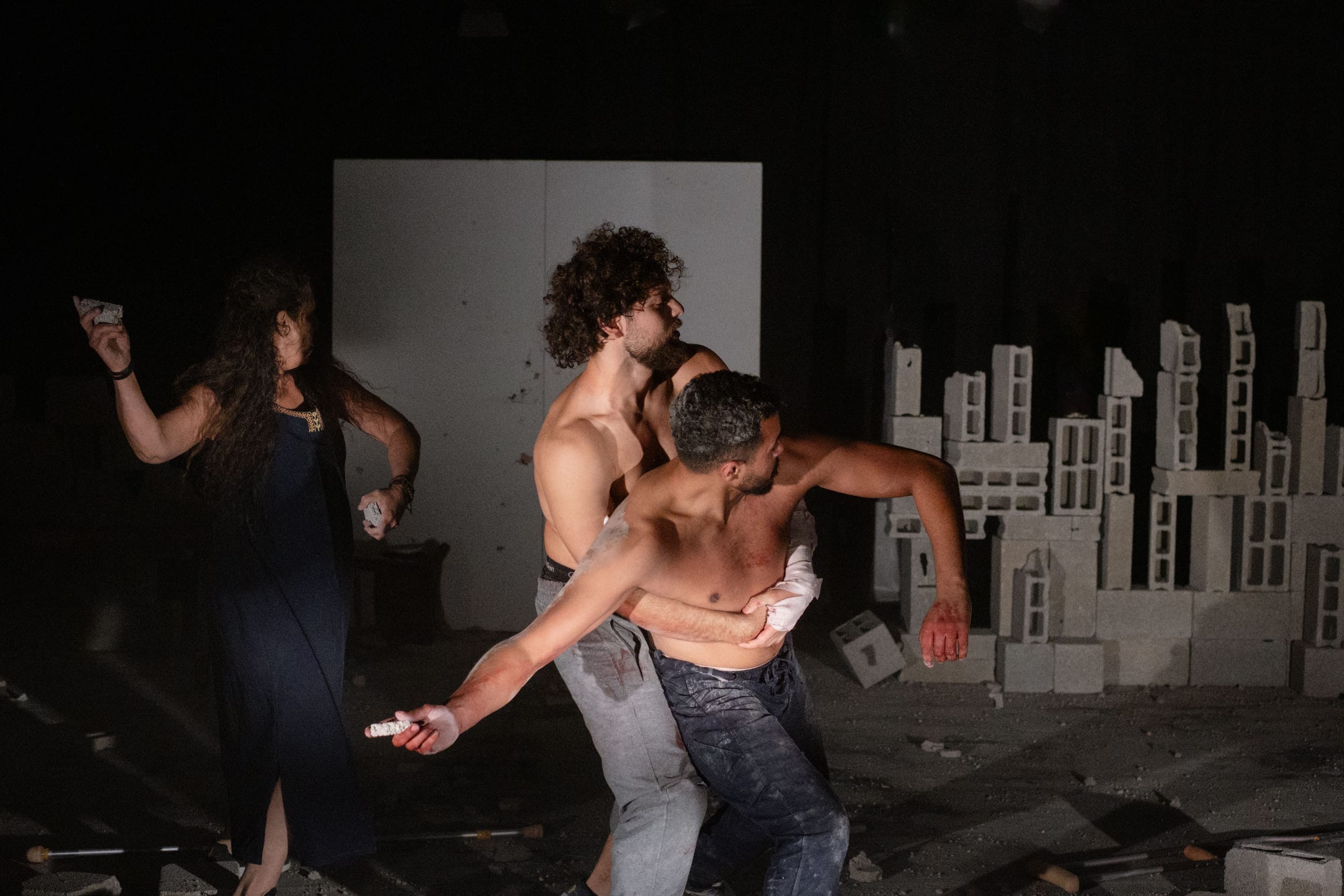
A wordless piece inspired by Suleiman Mansour's painting Jamal Al Mahamel (Camel of Burdens), in which a porter carries Jerusalem on his back. Four Palestinian performers and a live musician carry, stack and topple heavy concrete blocks: they build walls and a city skyline, get hurt and tend each other's wounds, around a wooden projection board, a table and a broken three-legged chair. It asks how much a person can carry, and what happens when a person becomes a symbol.
The design
The starting point was Suleiman Mansour's Jamal Al Mahamel (1973): an old porter, bent almost double, carrying Jerusalem in a bundle tied to his back with a rope. It is one of the best-known images in Palestinian art, printed on posters and hung in homes for decades. We asked what that burden looks like today.
Our answer was the concrete block. In Palestine, the grey hollow block is everywhere: in the houses people build one floor at a time, in the walls, in the work so many men do on building sites, and in the rubble left when a home is demolished. It is the material of building and of loss at the same time.
On stage the blocks are real and heavy. The performers lift them, stack them into walls and a city skyline, and knock them down again, so the weight is never acted: you see it in their bodies, and the dust stays on the floor and on their clothes. Around the blocks the space stays bare, with a table, a broken three-legged chair and a large wooden board that a projector turns into a screen, where the painting's world and the room keep meeting. The costumes come from the building site: work clothes worn thin and marked by dust, often just trousers and bare skin, so the bodies carry the story and every bruise and bandage shows.
Upcoming dates
6 – 8 Nov 2026
Riksteaterhuset, Hallunda, Sweden
17 Nov 2026
Lunds Stadsteater, Lund, Sweden
20 Nov 2026
Avesta Teater, Avesta, Sweden
23 Nov 2026
Folkets Hus Kulturcentrum, Sandviken, Sweden
27 – 28 Nov 2026
Uppsala Stadsteater, Uppsala, Sweden
The production
PhotoJohan Horst (1, 2, 3) · Sabrina Mukaker (4) · Nancy Mkaabal (5, 6, 7, 8, 9, 10, 11, 12, 13, 14)
Behind the scenes
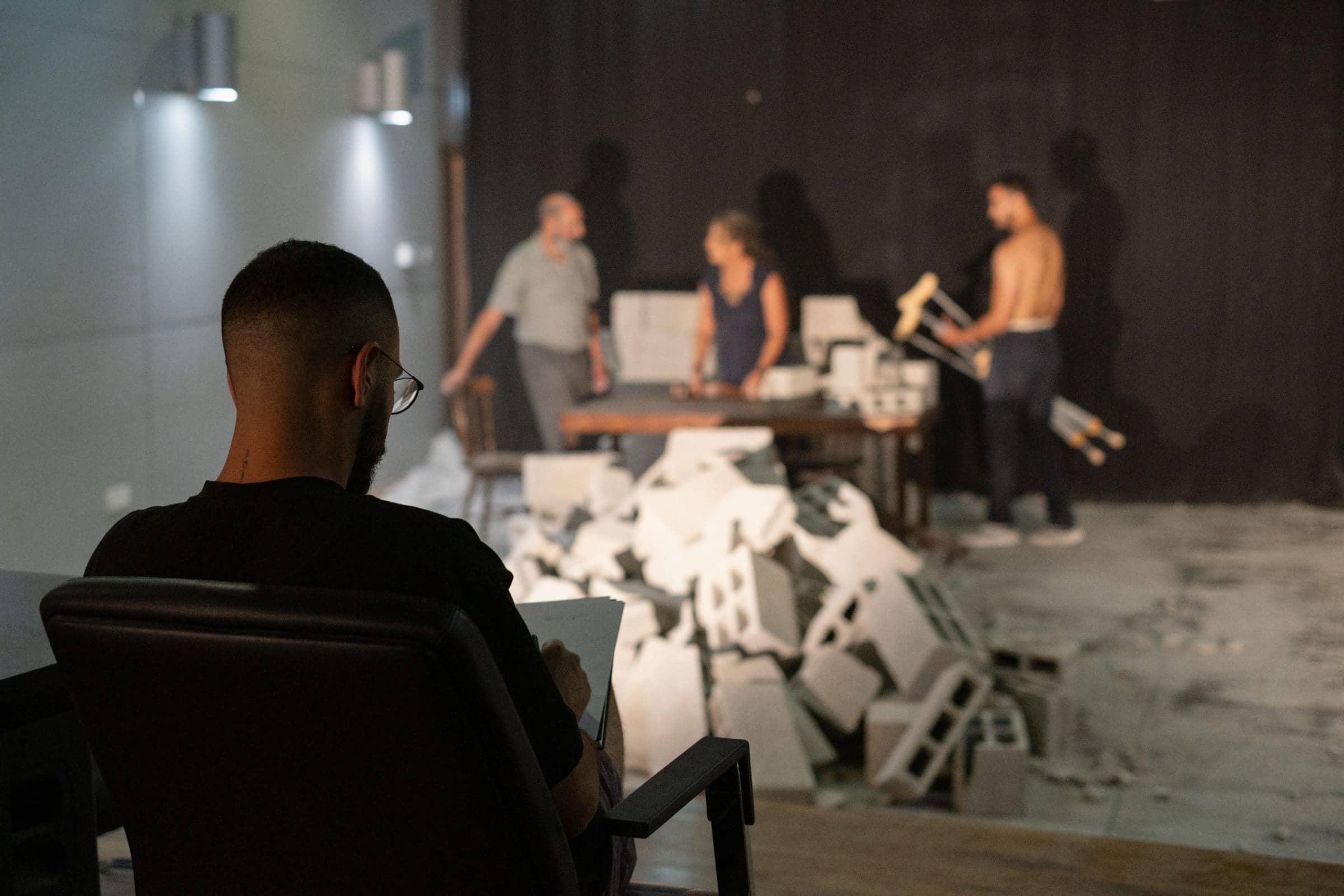
Bashar Murkus watching a run-through. 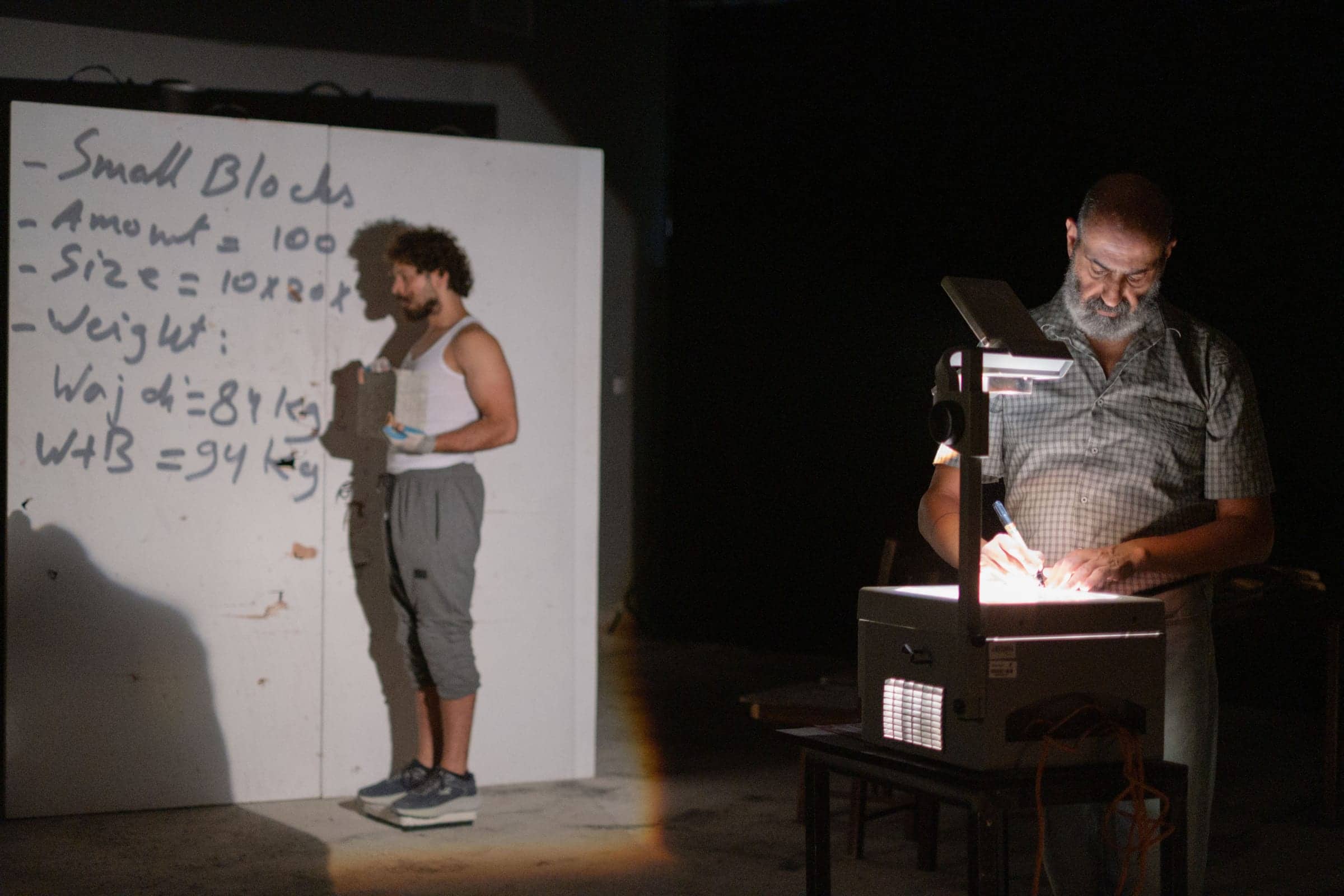
Working out the blocks: how many, what size, what weight. 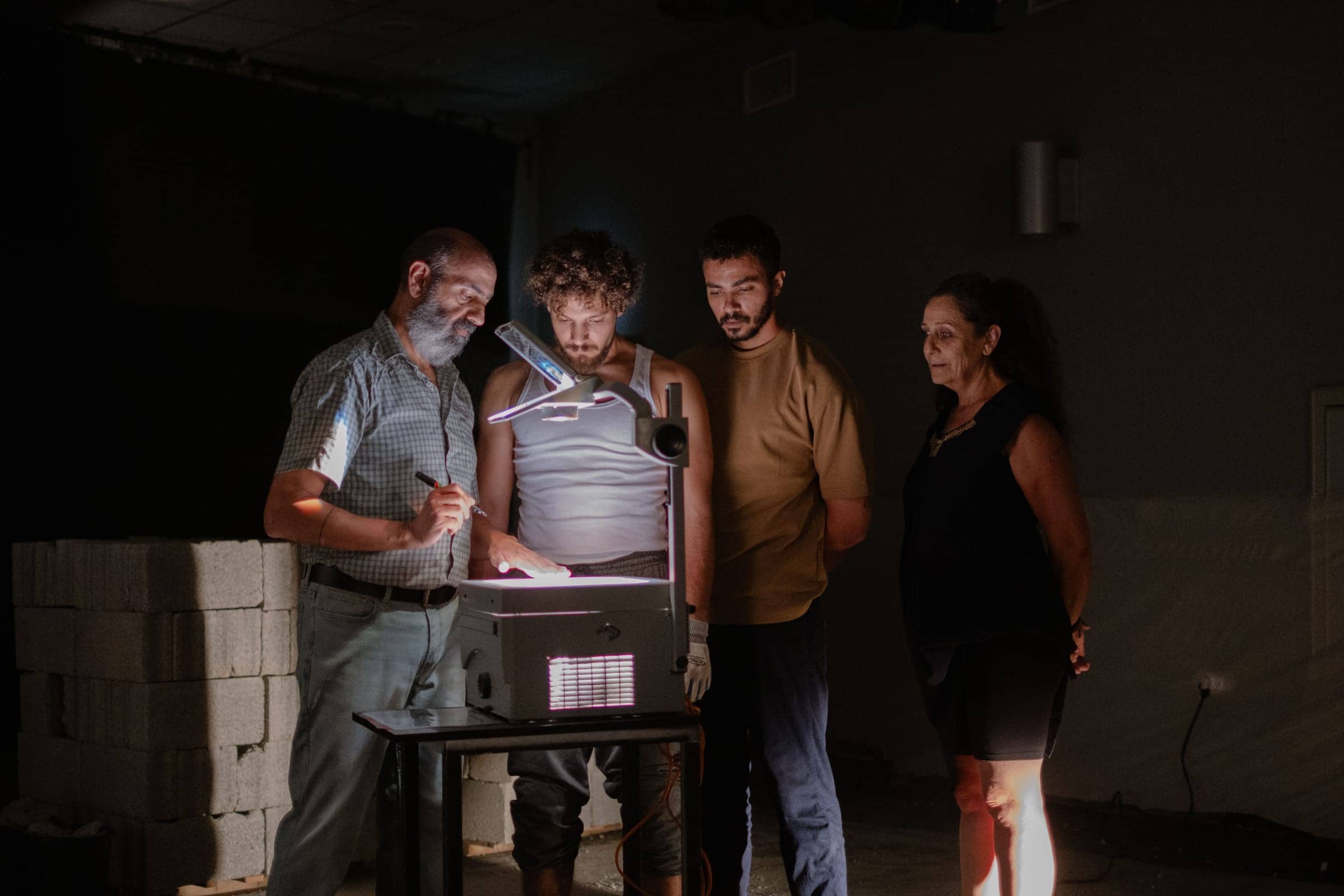
Around the projector. 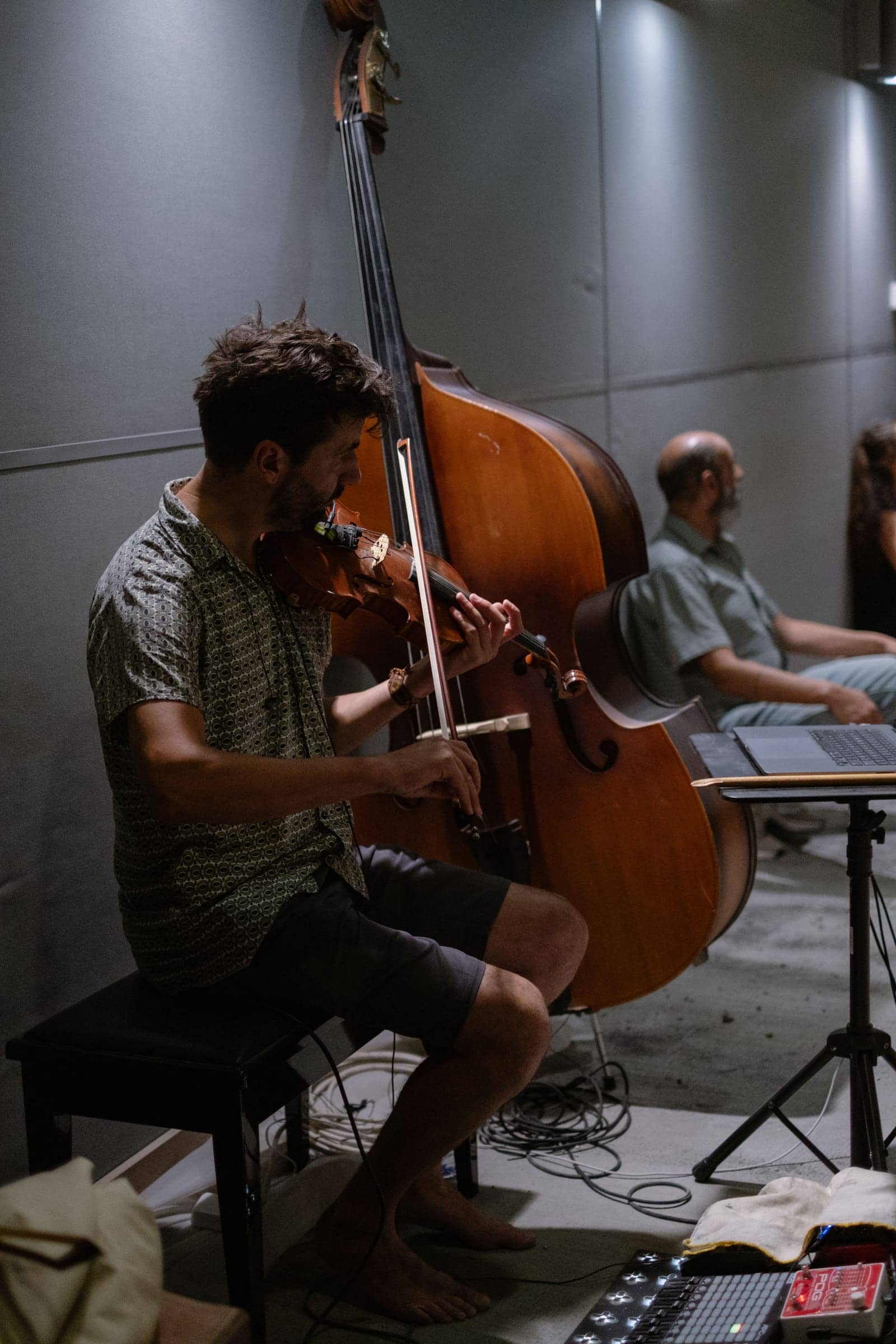
Wouter de Belder, who plays the music live, in rehearsal. 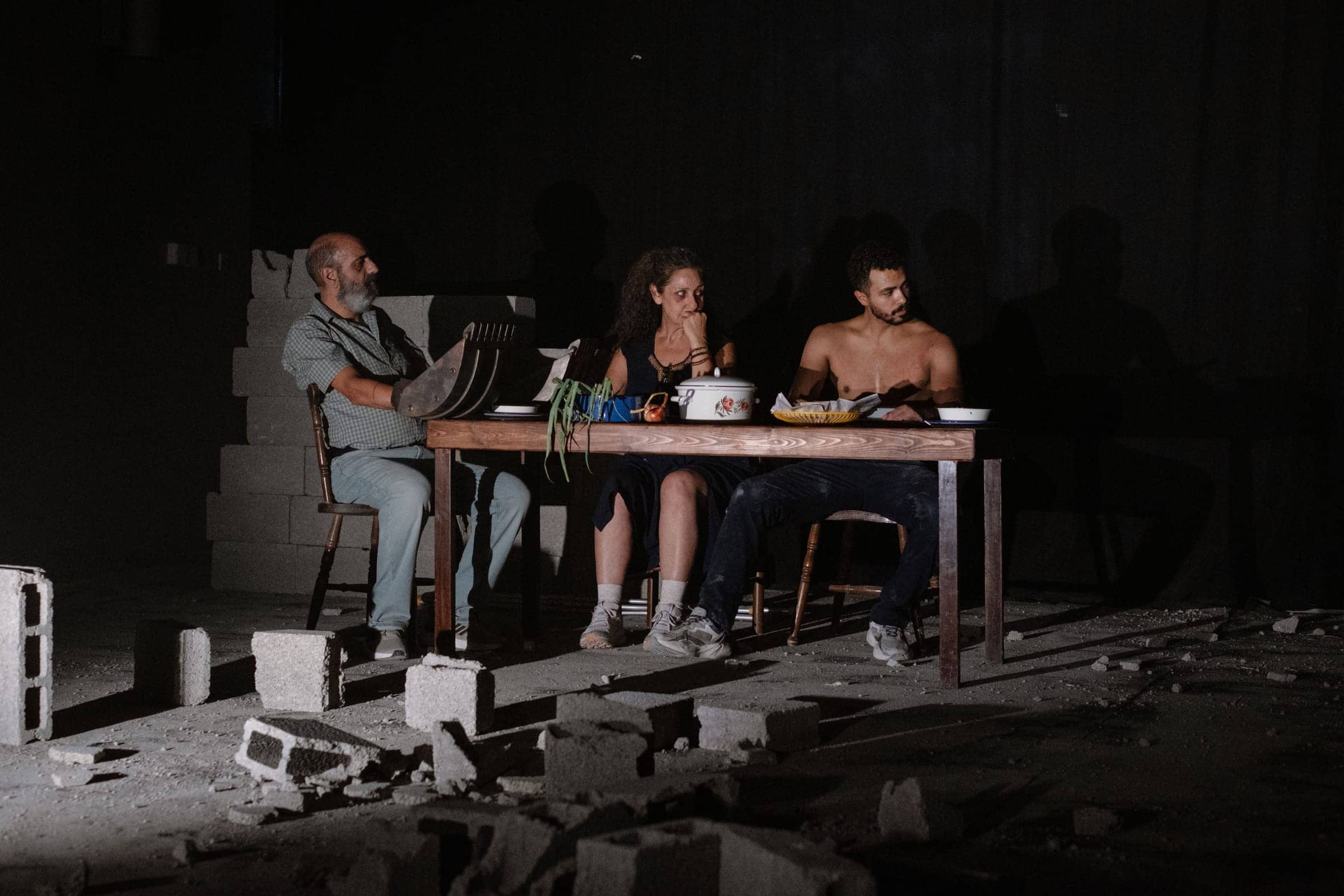
Rehearsing at the table.
Planning a production, shoot or campaign?
Let's talk